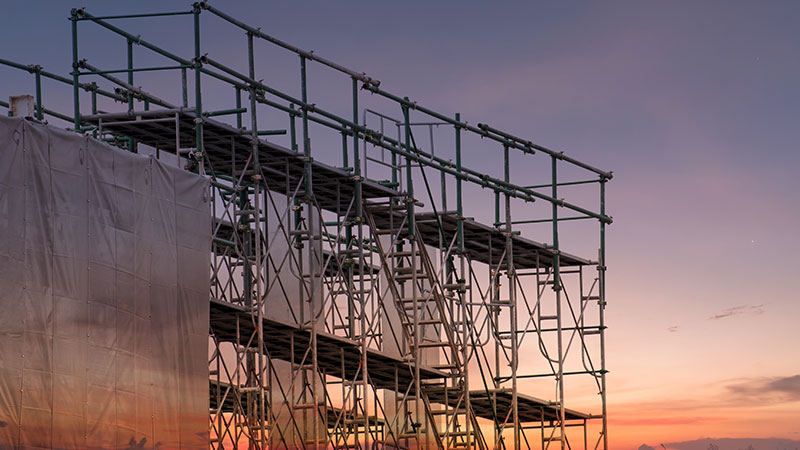
Innovation and Future Trends in Scaffolding Design
Scaffolding design is continuously evolving with innovation and future trends. Here are some of the most important innovations and developments shaping the future of scaffolding:
Use of Lightweight and Durable Materials: Traditional wooden and metal scaffolds are being replaced by materials such as aluminum, fiber-reinforced plastic, and carbon fiber. These materials are lighter, more durable, easier to assemble, and reduce labor costs, enabling more efficient scaffolding designs.
Modular and Adjustable Designs: With the increasing diversity of construction projects, modular and adjustable scaffolding systems are becoming more in demand. These designs provide flexibility and adaptability, allowing them to fit different building types and working conditions.
Automation and Smart Scaffolding: With the rise of digital technologies and automation in the construction industry, the use of smart scaffolding is also expanding. Equipped with sensors, data analytics, and automatic control systems, smart scaffolds help improve worker safety and optimize productivity.
Eco-Friendly Designs: Sustainability and environmental awareness have become major trends in construction. For this reason, scaffolding designs using recyclable materials, energy efficiency features, and waste reduction strategies are increasingly preferred.
3D Printing and Robotic Manufacturing: Advances in technology have enabled faster, more accurate, and cost-effective production of scaffolding components through 3D printing and robotic manufacturing methods. This allows for the creation of customized scaffolding systems tailored to specific project needs.